“I have nothing to hide”
It is the most common response when someone is asked about digital privacy. And it sounds reasonable — if you are not doing anything wrong, why would you care who sees your messages?
But this argument contains a critical misunderstanding about what privacy actually is.
Privacy is not about hiding wrongdoing. It is about controlling your own narrative, maintaining dignity, and having the freedom to think, speak, and grow without being observed and judged at every step.
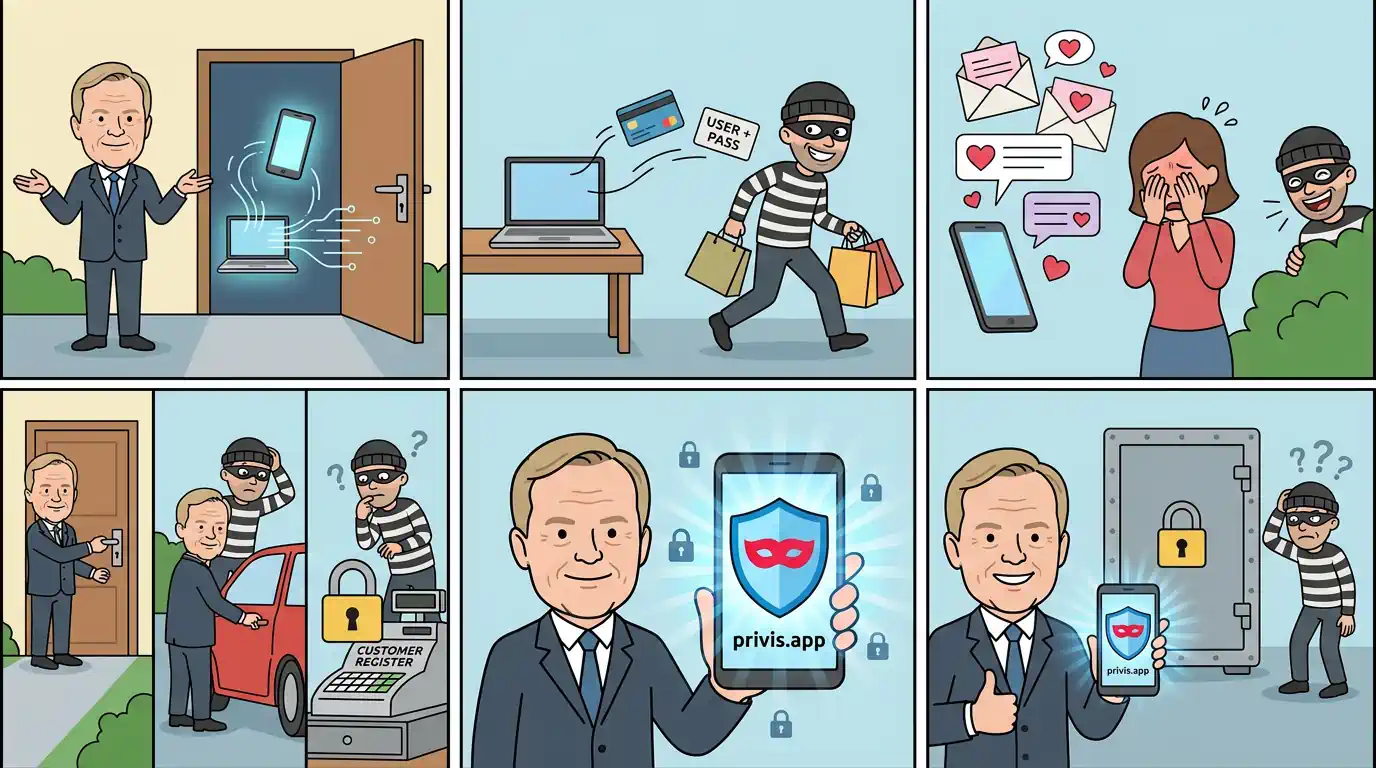
“I have nothing to hide” misses the point. Privacy protects your credit cards, passwords, love letters, and personal life — just like locking your house or car. Everyone needs to hide something. Everyone deserves that protection! Privacy isn’t about hiding crimes. It’s about protecting normal life. Use privis.app for real privacy.
The surveillance paradox
When people know they are being watched, they behave differently. This is not a theory — it has been demonstrated repeatedly in research. People self-censor. They avoid controversial topics. They become more conformist.
This is not because they are doing anything wrong. It is because constant observation is psychologically uncomfortable, and humans naturally adapt to it by becoming more cautious.
A society where all communication is monitored is not a free society — even if the monitors have good intentions today.
Privacy protects everyone, not just wrongdoers
Consider who needs private communication:
- Journalists protecting their sources
- Doctors and lawyers discussing patient and client matters
- Abuse survivors reaching out for help
- Employees discussing unfair treatment at work
- Ordinary people going through personal difficulties they are not ready to share publicly
None of these people are criminals. All of them have a genuine need for private communication.
The asymmetry of power
When you share your personal communications with a platform or a government, the relationship is not equal. They know everything about you. You know almost nothing about how that information is used, stored, or shared.
This asymmetry of information is a form of power. And historically, that power has been misused — even by organisations and governments that started with good intentions.
Privacy as a foundation for other rights
Freedom of speech means little if every word you say is recorded and could be used against you later. Freedom of association means little if every person you contact is known to third parties. Privacy is not a luxury — it is the foundation that makes other freedoms meaningful.
What you can do
You do not have to choose between convenience and privacy. Services like privis.app are designed to give you genuine private communication without requiring a phone number, email address, or any other identity link.
The technology is not complicated. The choice is simple. You deserve private conversations — not because you have something to hide, but because you have nothing to prove.